By hand
3 min / card6h every day
3 cards × 3 min × 40 questionsAn animated ASCII staircase sends an arrow and waves toward the upper right.
A breakthrough and revolution for USMLE prep
One question. Too many tabs. USMLE prep can mean searching explanations, rewriting notes, and building flashcards before you can focus on the concept.
Reviews pile up. The same doubts return. And the hours come out of your sleep, your family time, and your life beyond the exam.
StepGPT brings it together. Explanations, clinical reasoning, and Anki-ready recall in one workflow. Less time setting up. More time understanding medicine.
One question sends you to a qbank, an article, a video, two chatbots, and a Reddit thread. By the time you find the answer, you’ve lost the question.
USMLE Step 1 · Step 2 CK · Step 3
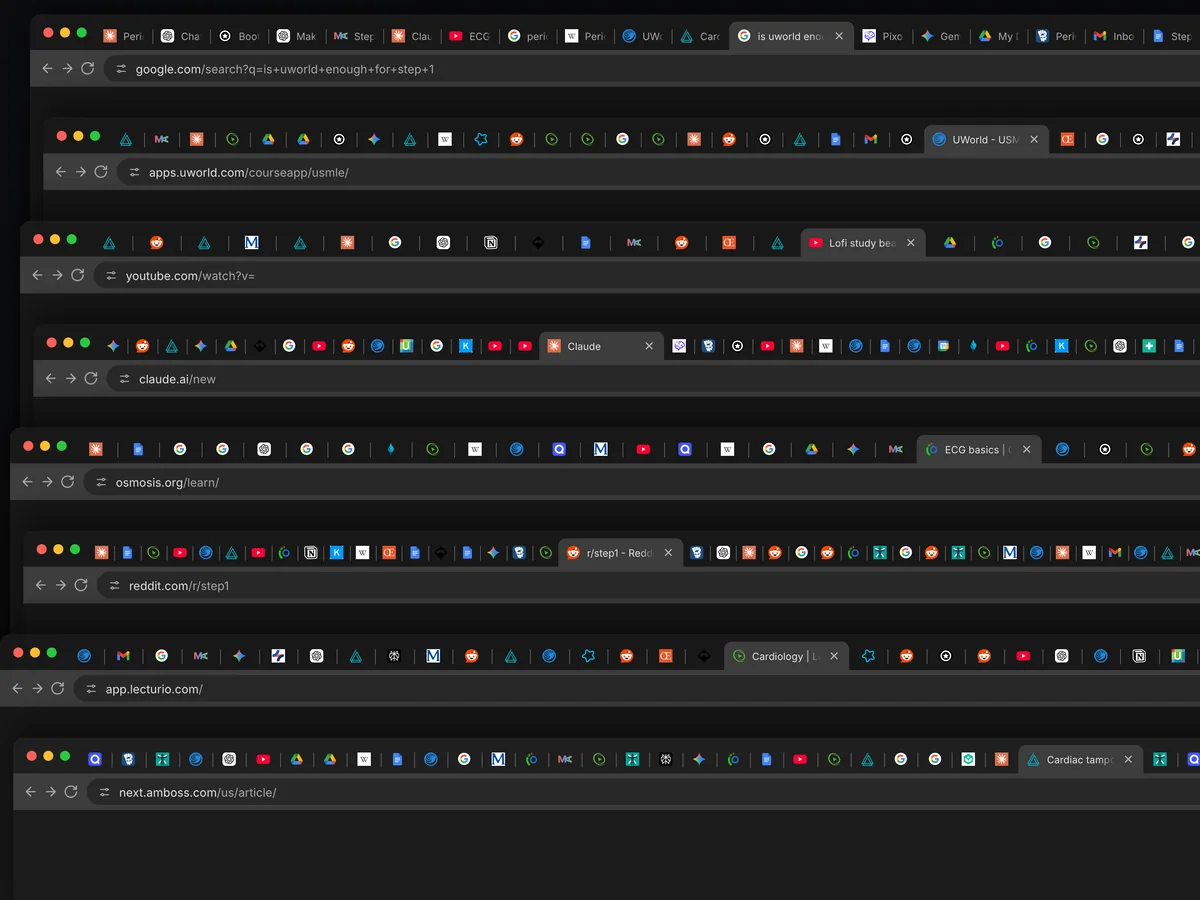
You’ve seen the name before, but can’t remember what it means. Now you’re back to looking it up.
USMLE Step 1 · Step 2 CK · Step 3
Missed it once, got it right twice, then missed it again. Keeping track of your weak spots takes spreadsheets, tags, and guesswork.
USMLE Step 1 · Step 2 CK · Step 3
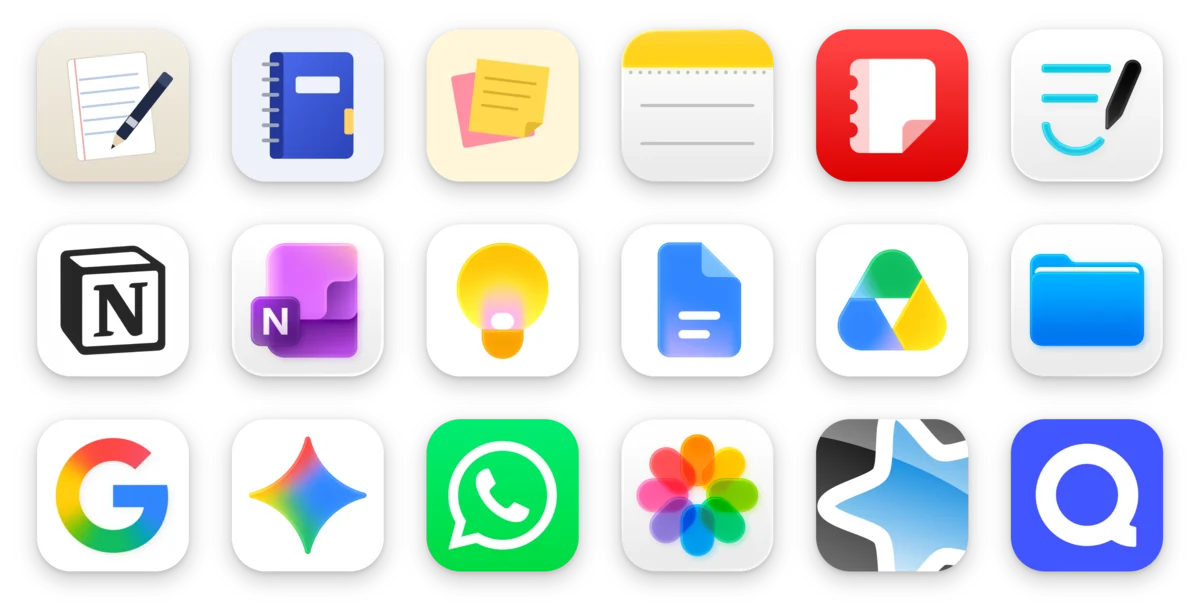
On paper, in Notion, a Google Doc, your camera roll, and a WhatsApp chat with yourself. When it’s time to review, you can’t find half of it.
USMLE Step 1 · Step 2 CK · Step 3
You sit down to study and spend hours making flashcards. By the time you’re done, there’s barely time to review them.
USMLE Step 1 · Step 2 CK · Step 3
Both answers look right. You reread the question, second-guess yourself, and watch the clock.
USMLE Step 1 · Step 2 CK · Step 3
The deciding clue makes the difference.
| Feature | StepGPT | UWorld | Gemini | Claude | ChatGPT | AMBOSS | Lecturio | Osmosis |
|---|---|---|---|---|---|---|---|---|
| Pricing USD | $55 /mo | $349 /30 days | $19.99 /mo | $20 /mo | $20 /mo | $19.99 /mo | $19.99 /mo | $249 /yr |
| Automatic Anki cards New Anki-ready recall cards generated from questions. | Yes | ● Manual or premade cards | ● In-app flashcards | × | × | ● Matches existing AnKing cards | × | ● Generated cards; copy into Anki |
| AI learning assistance AI explanations and guidance while studying. | Yes | ✓ UAsk; usage limits apply | ✓ Study Notebooks | ● Learning mode on Education plans | ✓ AI-assisted study | ✓ AI Mode Learning | ✓ AI Tutor; Premium required | ✓ Osmosis AI |
| Custom folders Folders to organize saved study material. | Yes | ● Notebook tabs and pages | ● Notebooks | ● Projects | ● Projects | ✓ Saved question folders | ● Custom playlists | ● Custom playlists |
| Highlight Help on any clue Select a clue for an explanation in your study workflow. | Yes | ● Contextual QBank help | ● Selected content in Chrome | × | ● Selected text via browser extension | ● Term explanations and clue hints | ● Contextual QBank hints | ● AI concept explanations |
| Highlight history Saved clue explanations to revisit later. | Yes | × | × | × | × | × | × | × |
| Clinical Chain reasoning map A question-specific map connecting clues, diagnosis, and management. | Yes | ● Guided clinical reasoning | ● General learning diagrams | ● Prompted diagrams | ● Prompted maps and diagrams | ● Diagnostic pathways | ● Diagnostic algorithms | ● Decision-Making Trees |
| Learning Lines for rapid review Condensed topic reviews for fast recall. | Yes Pro Learning Lines on Super | ● Prompted high-yield recaps | ● Generated study guides | ● Education study-guide templates | ● Generated study guides | ● High Yield toggle | ● Concise Concept Pages | ● High-Yield Notes |
| Question analysis Exam-focused Smart Summaries and question breakdowns. StepGPT Super includes Superintelligent Analysis. | Yes Superintelligent Analysis on Super | ● Prompted QBank explanations | × | × | × | ● AI explanations of uploaded questions | × | ● Conversational explanations |
| Answer breakdown See the best-supported answer, confidence and answer-key status. | Yes | × | × | × | × | × | × | × |
| Learning Lessons Understand the tested concept and its underlying mechanism. | Yes | ● Prompted mechanism explanations | × | × | × | ● AI concept explanations | × | ● AI mechanism explanations |
| Reasoning feedback Review your reasoning, identify gaps and find your next step. | Yes | ● Guided clinical reasoning | × | × | × | ● Mistake review and next steps | × | ● Guided Tutor Mode |
| Smart Sentences Unpack each clue: what it means and why it matters. | Yes | × | × | × | × | × | × | × |
| Smart Signals Learn why other answers fail and when they would fit. | Yes | ● Prompted differential reasoning | × | × | × | × | × | × |
| Smart Structure Identify the examiner’s task, pivotal clue and question structure. | Yes | × | × | × | × | × | × | × |
| Smart Strategy Turn the explanation into exam-day rules and takeaways. | Yes | ● Prompted exam tips | × | × | × | ● Prompted takeaways and next steps | × | × |
| Clinical Closeness Tell similar conditions apart by their key differences. | Yes | ● Prompted differential reasoning | × | × | × | ● AI comparisons of look-alike conditions | × | × |
| Reference image atlas Explore relevant reference images when available. | Yes | × | × | × | × | × | × | × |
| Flashcard editor Edit, tag, regenerate or dismiss suggested cards. | Yes | ● Customizable SmartCards | × | × | × | × | × | × |
| Spaci decks Save selected flashcards directly to your Spaci decks. | Yes | × | × | × | × | × | × | × |
| Anki collection & export Collect cards across questions and export a combined .apkg deck. Direct desktop transfer uses AnkiConnect. | Yes | × | × | × | × | × | × | ● Copy generated cards into Anki |
| Searchable history Revisit questions and search concepts, sources and notes. | Yes | ● Search notebook text and tags | × | × | × | × | × | × |
| Starred library Save summaries, lessons, strategies and clinical reasoning sections. | Yes | × | × | × | × | × | × | × |
| Rich-text notes Write with lists and tables, add selected text, or expand into a focused editor. | Yes | ✓ My Notebook editor | × | × | × | × | × | × |
| Smart Stickies Pin colored reminders alongside each question. | Yes | × | × | × | × | × | × | × |
| Saved highlights Mark explanations in four colors and keep them with your questions. | Yes | ● Notebook highlighting | × | × | × | × | × | × |
| Flexible question input Type, paste or drop text; add screenshots, PDFs or camera images. | Yes | × | × | × | × | ● Questions and uploaded study materials | × | × |
| Exam-specific context Tailor your analysis to your selected medical exam. | Yes | ✓ USMLE Step-specific guidance | × | × | × | ✓ Adapts to selected study goals | × | × |
| Reading preferences Choose split, stacked or centered layouts, adjust text size and resume your reading position on this device. | Yes | × | × | × | × | × | × | × |
| Keyboard shortcuts Navigate, search, save and take notes with fewer clicks. | Yes | × | × | × | × | × | × | × |
| Answer & confidence tracking Record your answer and how confident you felt. | Yes | × | × | × | × | × | × | × |
| Activity & streaks See your last 30 days of study and your daily streak. | Yes | × | × | × | × | × | × | × |
| Weekly wrap Review question activity, self-reported accuracy, confident misses and saved cards. | Yes | × | × | × | × | × | × | × |
| MedGPT access Ask follow-up questions beside your analysis with the question’s context ready. | Yes Plus / Max; Pro / Ultra on Super | × | × | × | × | × | × | × |
| USMLE Universe Explore systems, topics, and their connections in an interactive study map. | Yes Super only | × | × | × | × | × | × | × |
| QBank access Access to an existing USMLE question bank. | Yes Super only | ✓ Full QBank | × | × | × | ✓ 50 questions/mo; unlimited extra | ✓ Premium required | ✓ MD subscription |
 StepGPT
Choose your StepGPT plan, sign in with your MedAngle account, and complete checkout. Then add a question to start exploring the answer, the reasoning, and what to remember.
StepGPT supports Step 1, Step 2 CK, and Step 3. Choose your exam to give your question analysis the right context.
Yes. Add screenshots, PDFs, or camera images — or just type or paste your question.
Each analysis breaks down the answer, the tested concept, and the reasoning. Highlight Help lets you explore individual clues and understand why they matter.
Automatic Anki creates Basic and Cloze cards from your questions. Edit and collect them, then export a combined .apkg deck. You can also send cards to desktop Anki with AnkiConnect.
It connects the presentation, clues, and clinical reasoning to the next steps — so you can follow how the answer fits together.
Learning Lines help you explore medical terms and linked summaries as you read. StepGPT Super includes Pro Learning Lines.
Yes. Find past questions in searchable history, organize them into custom folders, and keep notes, saved highlights, and starred explanations together.
Super adds MedGPT Pro/Ultra, Superintelligent Analysis, Pro Learning Lines, USMLE Universe, and QBank access to the core tools in StepGPT.
Yes. Ask MedGPT beside your analysis, with the question’s context already there. Your MedGPT tier depends on your StepGPT plan.